Shipping Container Delivery: How to Prepare Your Site Before the Truck Arrives
Shipping container delivery goes smoothly when your site is ready, and can go sideways when it isn’t. A tilt-bed or roll-off truck needs specific clearances, ground conditions, and placement access that most buyers don’t think about until the driver is already on the property. Lets go over exactly what to prepare before your shipping container delivery day so there are no surprises, no delays, and no extra trip charges. Whether you’re placing a container on a job site, a farm, or a residential property in Maryland, Virginia, or anywhere in the Mid-Atlantic, the prep steps are the same.

Why Site Prep Matters Before Delivery
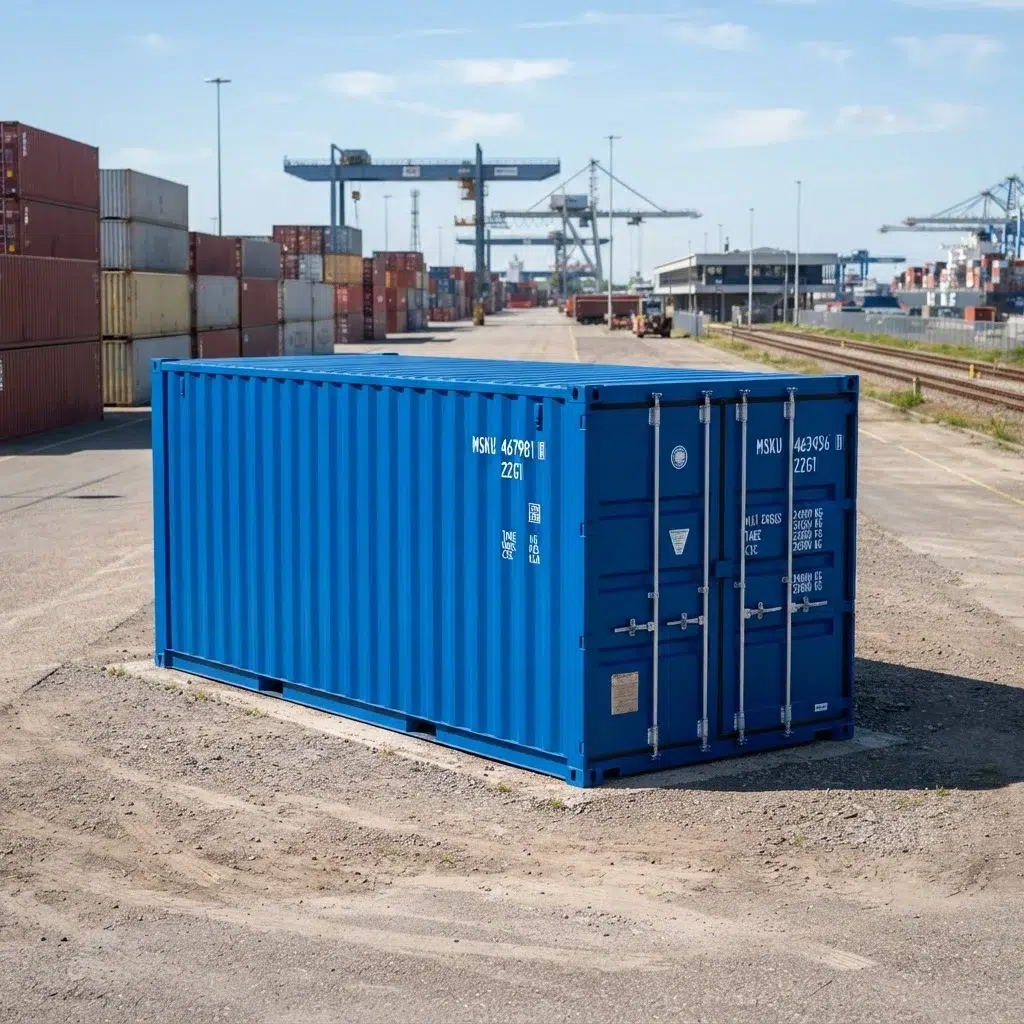
Shipping container delivery isn’t like a standard freight drop. The truck that brings your shipping container is typically a tilt-bed trailer or a roll-off truck and it is long, heavy, and needs room to maneuver. A 40ft container on a tilt-bed truck can exceed 70 feet of total length. A 20ft container setup is more forgiving but still requires a clear run to position correctly.
Drivers are experienced and want to make the drop work. But if your site can’t accommodate the truck safely, they can’t place the container and you may be charged a redelivery fee. A few hours of prep work before delivery day eliminates that risk entirely.
The Two Things That Stop Most Deliveries
- Insufficient access length can mean that not enough straight clearance for the truck to back in and lower the container
- Soft or unstable ground can mean a fully loaded container truck can sink into saturated soil, mud, or improperly compacted fill
Both are preventable. Here’s how.
Step #1 Measure Your Access Clearance
Before anything else, measure the approach to where your container will sit. You need unobstructed, relatively straight access for the delivery truck to back into position.
Minimum Clearance by Container Size
| Container Size | Minimum Access Length | Notes |
|---|---|---|
| 10ft container | 40–50 feet | Most flexible and fits tight lots and urban sites |
| 20ft container | 60–80 feet | Standard residential driveway usually works |
| 40ft container | 100–120 feet | Needs a full straight run and tight lots may require a crane alternative |
Also check for overhead obstructions like power lines, tree branches, and low overhangs can block the tilt-bed mechanism. Standard container height is 8’6″. Add the truck bed height and the tilt angle and you need at least 18–20 feet of vertical clearance at the approach.
If you’re not sure your lot can handle a 40ft delivery, consider a 20ft container or a 10ft unit, both are far easier to place on constrained sites. Our team at K&K can talk through the options before your order is confirmed.
Step #2 Prepare the Ground
The container needs to rest on a surface that won’t shift, settle unevenly, or sink over time. A container that isn’t level causes door alignment problems and puts stress on the frame. Ground prep doesn’t need to be expensive, it just needs to be right.
Three Ground Prep Options That Work
- Railroad ties or timber beams are the most common residential solution. Place 4–6 ties perpendicular to the container, spaced roughly 8 feet apart. They distribute weight and keep the container off direct soil contact, which reduces corrosion and improves airflow underneath.
- Compacted gravel pad with 4–6 inches of compacted crushed stone or road gravel creates a stable, draining surface. Best option for long-term placements and sites with poor drainage.
- Concrete blocks or piers are solid concrete deck blocks placed under the four corner castings. Clean, level, and permanent. Ideal if you’re doing a modification project or a container office build.
What to Avoid
- Bare soil or grass is fine for a temporary placement but the container will sink and tilt over time, especially after rain
- Asphalt in hot climates where a loaded container can indent blacktop in summer heat
- Uneven fill or disturbed earth where recently graded or backfilled areas haven’t compacted yet and will settle unevenly under weight
For more detail on what grade of container suits outdoor long-term storage, see our container grades guide. A unit that’s going to sit outside for years should be at minimum a wind and watertight certified container.
Step #3 Check Local Permit Requirements
Permit requirements for shipping container placement vary significantly by county and municipality across the Mid-Atlantic. Some jurisdictions treat containers as temporary structures and require no permit at all for placements under 6 months. Others classify them as accessory structures and require a building permit regardless of how long they’ll sit.
General Rules by State
| State / Region | General Requirement | Where to Check |
|---|---|---|
| Maryland | Permit typically required for permanent placement; varies by county | Your county’s Department of Permits & Inspections |
| Virginia | Varies by locality; Northern VA tends to be stricter | Your city/county building department |
| Washington DC | DCRA permit required for most placements | DCRA.dc.gov |
| Pennsylvania | Municipality-dependent; rural areas often more flexible | Your local zoning office |
| West Virginia | Generally flexible outside incorporated areas | County assessor or zoning board |
| Delaware | Permit usually needed in incorporated areas | State Division of Planning & Zoning |
If you live in an HOA community, check your CC&Rs before ordering. Many HOAs restrict or prohibit visible storage containers on residential lots. For further guidance on permit research, HUD’s local housing resources can point you to the right county contacts. The International Building Code also provides baseline definitions that most state codes reference when classifying accessory structures.
Step #4 Confirm Utilities and Hazards Underground
Before delivery day, you can call 811, the national “Call Before You Dig” hotline, if your placement involves any ground work, including driving stakes, installing timber ties, or pouring concrete piers. Underground utility lines run closer to the surface than most people expect, and damage during site prep can result in service interruptions and liability.
Also mark the location of any irrigation lines, drainage pipes, or septic components that could be damaged by the weight of a loaded container parked overhead. A shipping container fully loaded can weigh thousands of pounds which enough to crush a shallow drainage pipe.
The 811 Call Before You Dig service is free, fast, and available in all Mid-Atlantic states.
Step #5 Mark the Placement Spot
On delivery day, the driver will place the container as close to your marked target as possible, but they can’t see what you see from the ground. Mark the intended placement with spray paint, flags, or cones before the truck arrives. Note which direction you want the doors to face, this is easy to communicate but impossible to correct once the container is set and the truck has left.
Door Orientation Tips
- Face doors away from prevailing wind direction to reduce weather intrusion
- Face doors toward your main access path for easiest loading and unloading
- On job sites, orient doors away from public view if site security is a concern
- For container office or conversion projects, consider which wall you’ll cut windows or a personnel door into before finalizing orientation
Site Prep Checklist | Delivery Day Ready
| Task | Done? |
|---|---|
| Measured access clearance (60–120ft depending on size) | ☐ |
| Checked overhead clearance (18–20ft minimum) | ☐ |
| Ground prep complete (ties, gravel, or blocks) | ☐ |
| Permit checked and obtained if required | ☐ |
| Called 811 if any ground work involved | ☐ |
| Placement spot marked with spray paint or flags | ☐ |
| Door orientation decided and communicated to driver | ☐ |
| HOA or landlord approval confirmed if applicable | ☐ |
Frequently Asked Questions
| Question | Answer |
|---|---|
| Do I need a forklift on site? | No. K&K’s roll-off and tilt-bed trucks place the container without any additional equipment in most situations. |
| What if my driveway can’t fit the truck? | Contact us before ordering. We can assess your site and recommend the right container size or discuss crane placement for very tight spaces. |
| How level does the ground need to be? | Within a few inches across the full length. Significant slope will cause door alignment problems and accelerate frame stress. |
| Can I place a container on a slope? | Yes, with proper blocking. Concrete piers or stacked timbers can compensate for moderate grade. Steep slopes need engineering. |
| How long does delivery take on the day? | The actual drop typically takes 20–45 minutes once the truck is on site and positioned. |
Get Your Container Delivered Right the First Time
When your site is prepared, shipping container delivery is fast and straightforward. K&K International has been delivering containers across Maryland, Virginia, DC, West Virginia, Delaware, and Pennsylvania for over 30 years with our own trucks, our own inventory, and zero broker markups. Call us at (410) 574-5550 or visit our quote page to confirm delivery to your site today.
About K&K International
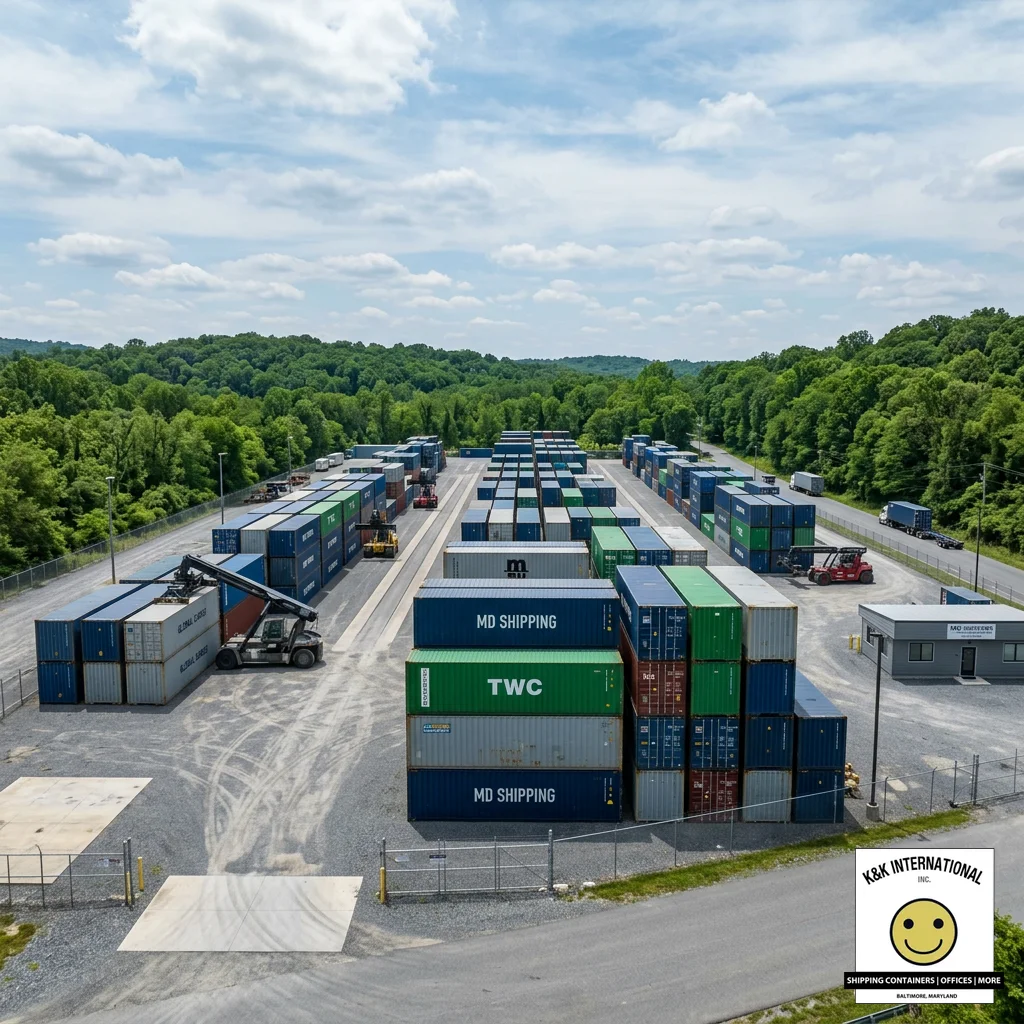
K&K International is a family-owned shipping container supplier based in the Mid-Atlantic region, serving Maryland, Virginia, Washington DC, West Virginia, Delaware, and Pennsylvania. With over 30 years of direct-seller experience, a real container yard, and an in-house delivery fleet, K&K sells and delivers containers directly to contractors, businesses, homeowners, and government agencies, no brokers, no inflated pricing. Visit kkcontainer.com or call (410) 574-5550.
Tags: Shipping Containers